The Olde Pink House: A Savannah Family Divided by Revolution | Part 1
Savannah Secrets
The Olde Pink House| Part 1
A Savannah Family Divided
Unlike its neighbors to the north, Georgia was not intended to become a land of wealthy plantation owners. Oglethorpe and the colony's trustees envisioned a society of small, independent farmers, men who could support themselves through honest labor rather than inherited wealth or the exploitation of enslaved people.
The colony would also serve as a military buffer between Britain's prosperous Carolina settlements and Spanish Florida. Georgia's founders were idealists, certainly, but they were practical enough to recognize the value of a well-placed frontier.
Land grants were limited, rum was prohibited, and slavery was forbidden. The trustees hoped to avoid the enormous disparities in wealth that characterized other colonies.
It was an ambitious experiment.
And, as so often happens when human ambition meets human nature, things did not go entirely according to plan.
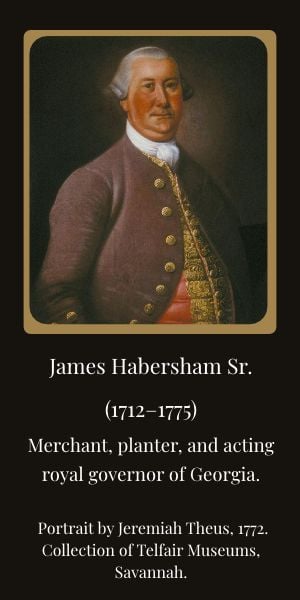
Five years after Savannah's founding, a young Englishman named James Habersham arrived in Georgia.
Born in Yorkshire and trained in his uncle's London mercantile business, Habersham had not come to Georgia seeking a plantation fortune. He was a deeply religious young man whose life had been transformed by the preaching of George Whitefield, the celebrated evangelist.
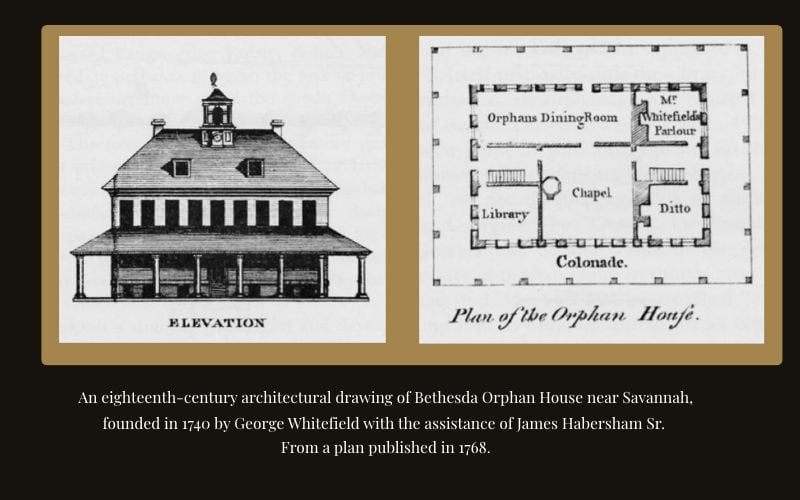
Whitefield dreamed of establishing an orphanage near Savannah, and Habersham accompanied him to Georgia in 1738 to help make that dream a reality.
The result was Bethesda Orphanage, established in 1740, an institution that would become an important part of Georgia's colonial history.
Habersham helped administer the orphanage, managed its finances, and married Mary Bolton in 1740. He appeared to have found his calling in religious and charitable work.
But James Habersham was also an extraordinarily capable businessman.
In 1744, he established a mercantile partnership with Francis Harris. Their business flourished, connecting Georgia's developing economy to the wider Atlantic trading world.
Meanwhile, the colony itself was changing.
The trustees' restrictions had never pleased everyone. Settlers complained that small landholdings and the prohibition on enslaved labor prevented them from competing with the prosperous plantations of South Carolina.
Among those pushing for change were men who envisioned Georgia not as a colony of modest yeoman farmers, but as a place where considerable fortunes could be made.
Not everyone agreed.
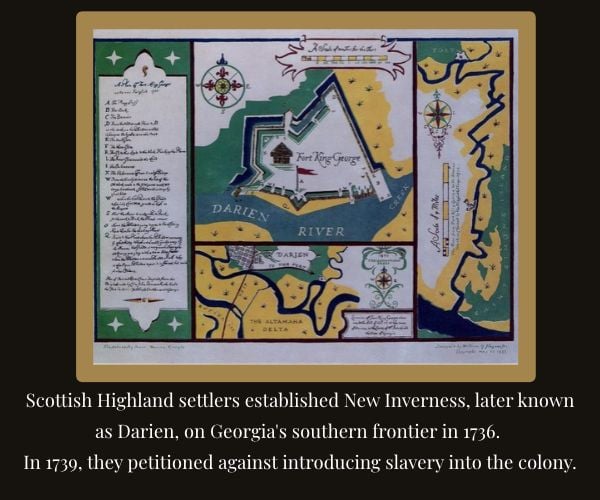
In 1739, the Scottish Highlanders who had settled at Darien formally petitioned Oglethorpe against introducing slavery. Their objections were practical, military, and moral. They warned that slavery would undermine independent labor and create dangers for the colony. They also questioned the justice of condemning generations of people to bondage.
Their remarkable protest, and the story of how Georgia's original ideals eventually gave way to plantation wealth, deserve an article of their own.
For now, however, our story returns to Savannah, where James Habersham was becoming one of the colony's most influential men.
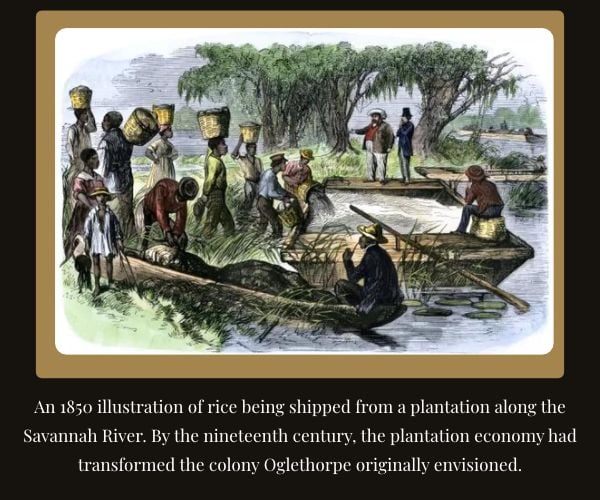
The trustees finally permitted slavery in 1750, and by the time Georgia became a royal colony in 1752, the foundations of its plantation economy were firmly established.
Habersham was among those who benefited enormously from the transformation. He acquired extensive lands and enslaved laborers, invested in plantation agriculture, and became one of Georgia's wealthiest men.
The young man who had arrived to help establish an orphanage had become a powerful merchant, planter, and public official.
He served as provincial secretary, president of the royal council, and eventually acting royal governor during Sir James Wright's absence from 1771 to 1773.
By almost any measure, James Habersham had achieved extraordinary success.
There was, however, one problem.
He had three sons.
And those sons were beginning to develop political opinions that their father did not share.
As tensions between Britain and its American colonies intensified, James Habersham remained loyal to the Crown. He opposed some of Parliament's policies, but he believed the colonies' grievances should be resolved without severing their allegiance to Britain.
His sons saw matters differently.
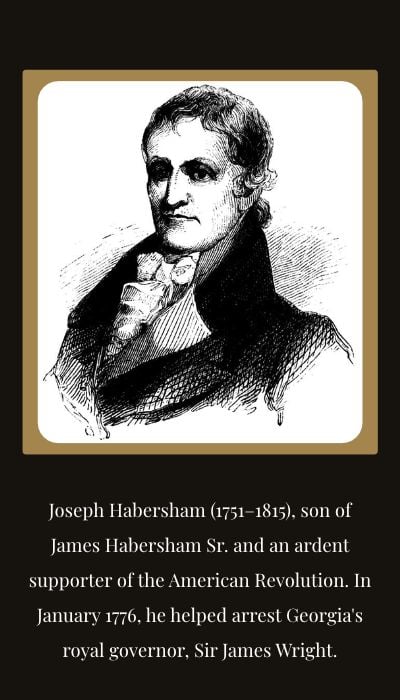
James Jr., Joseph, and John Habersham all became supporters of the growing revolutionary movement. Joseph, in particular, embraced the activities of Savannah's Sons of Liberty, the young Patriots who challenged royal authority.
In 1775, Joseph participated in the raid on the King's powder magazine in Savannah, an act of open defiance against British rule.
Imagine the conversations around the Habersham family table.
The father had spent nearly forty years building his fortune and position within British Georgia. His sons were now helping dismantle the political system that had made his success possible.
And the Habershams were not the only prominent Savannah family divided by the coming Revolution.
The conflict would pit neighbors against neighbors, friends against friends, and fathers against sons.
James Habersham understood that painful reality all too well.
He died on August 28, 1775, while visiting New Jersey, before the colonies formally declared independence. He would never witness the full extent of his sons' revolutionary activities.
Just five months later, in January 1776, Joseph Habersham personally arrested Georgia's royal governor, Sir James Wright.
The son of a former acting royal governor had helped bring royal government in Georgia to its knees.
And his eldest brother, James Jr., would eventually build a magnificent house overlooking Reynolds Square.
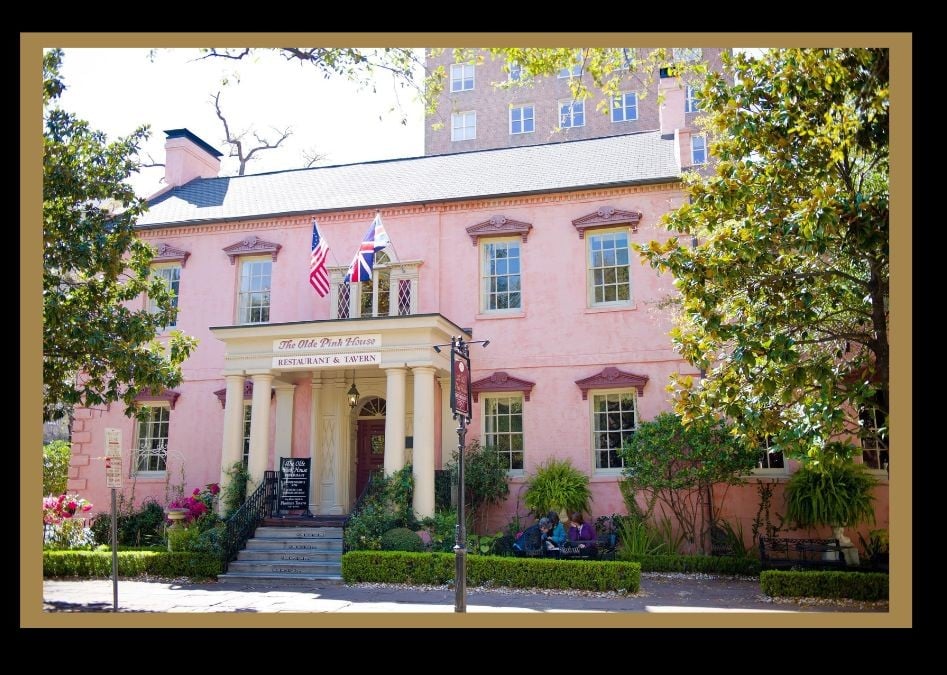
Today, we call it the Olde Pink House.
But when its story began, Savannah was still deciding what kind of city it would become.
Next Sunday, we'll explore the house itself, including some rather intriguing questions about how James Habersham Jr. acquired the property and a financial dispute involving the mansion's construction.
They say if walls could talk, they'd have stories to tell. And my research leads me to believe that after more than two centuries overlooking Reynolds Square, the Olde Pink House has quite a few.
Savannah Secrets | The Olde Pink House
A Four-Part Historical Series
Part 1: A Savannah Family Divided by Revolution
Part 2: A Mansion, a Mystery, and a Matter of Money
Part 3: From Bank Vaults to Ballroom Fires
Part 4: Ghost Stories and Savannah Legends