The Olde Pink House: From Bank Vaults to a Savannah Landmark | Part 3
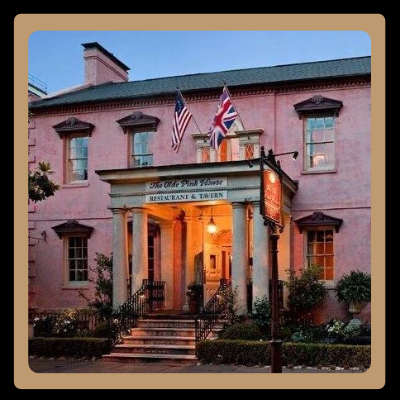
When we last visited Reynolds Square, we were unraveling the rather complicated history behind one of Savannah's most recognizable houses.
We discovered that the story of James Habersham Jr.'s mansion wasn't quite as straightforward as the familiar tourist accounts would have us believe.
But whatever disagreements surrounded its construction, one thing was certain: by the dawn of the nineteenth century, the elegant residence had become a permanent fixture on Reynolds Square.
And its days as a private family home were coming to an end.
When Money Moved In
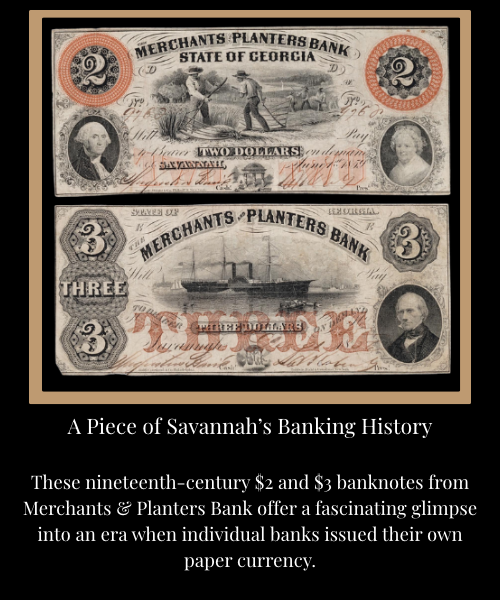
In 1812, the former Habersham residence became the home of Planters Bank, one of Georgia's earliest banking institutions.
It was a remarkable transformation.
The rooms that had once welcomed Savannah's fashionable society were now devoted to the considerably less romantic business of money.
Banking was an increasingly important part of the city's commercial life. Savannah's merchants, cotton factors, and plantation owners needed institutions capable of handling deposits, extending credit, and financing trade.
And what better address for such an enterprise than an imposing mansion overlooking one of the city's most prominent squares?
The building underwent changes to accommodate its new purpose. A northern wing was added, and the handsome portico supported by Doric columns helped give the exterior the appearance we recognize today.
But perhaps the most intriguing additions were the bank vaults.
Behind heavy doors, the wealth of Savannah was secured within walls that had once enclosed a gentleman's residence.
Some of those old vault spaces survive in the building today, repurposed for storing wine.
I find that rather delightful.
After all, if a building must spend two centuries reinventing itself, exchanging banknotes for bottles of wine seems a perfectly respectable career change.
A City at War
The Olde Pink House had already witnessed one revolution during its earliest years.
Now another conflict was approaching.
By the 1860s, Savannah was one of the Confederacy's most important port cities. The Civil War disrupted commerce, divided families, and threatened the economic foundations upon which much of the city's prosperity had been built.
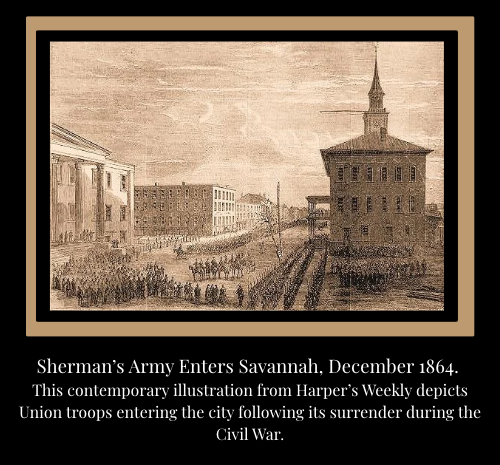
In December 1864, Union General William Tecumseh Sherman's forces reached Savannah at the conclusion of their March to the Sea.
The city surrendered, avoiding the widespread destruction suffered by many other Georgia communities.
Sherman famously presented Savannah to President Abraham Lincoln as a Christmas gift.
For the former Habersham mansion, the change of military control brought yet another chapter in its long history.
Historical accounts identify the building as having served as headquarters for a Union officer, General York, during the occupation.
Imagine the conversations those walls heard.
First the political disagreements of a family divided by the American Revolution, then the financial dealings of Savannah's merchants, and now the business of an occupying army.
The faces changed. The uniforms changed. The arguments undoubtedly changed.
But the house remained.
The Long Years of Decline
After the Civil War, Savannah faced the difficult business of rebuilding its economy.
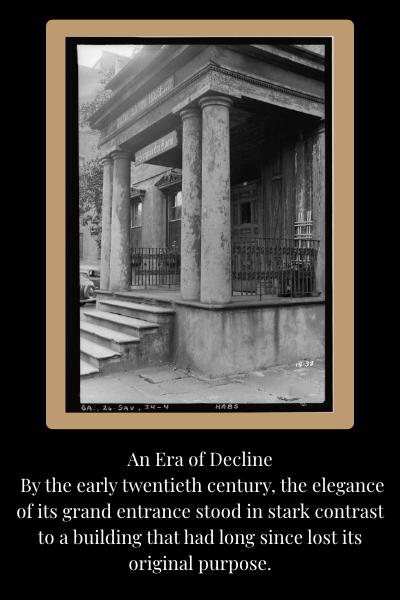
The former mansion continued to find new uses, although not all were particularly glamorous.
Over the following decades, the building housed professional offices and commercial enterprises, including attorneys and a bookstore.
Its days as one of Savannah's grand private residences were long behind it.
And like many historic buildings, it suffered from changing tastes, deferred maintenance, and the simple passage of time.
By the early twentieth century, Savannah possessed an extraordinary collection of old houses, but age alone did not guarantee their survival.
Many buildings that we now regard as priceless architectural treasures were once considered inconvenient, outdated, or simply too expensive to maintain.
Demolition was often easier than preservation.
Fortunately, some Savannah residents were beginning to see things differently.
A Lady with an Eye for History
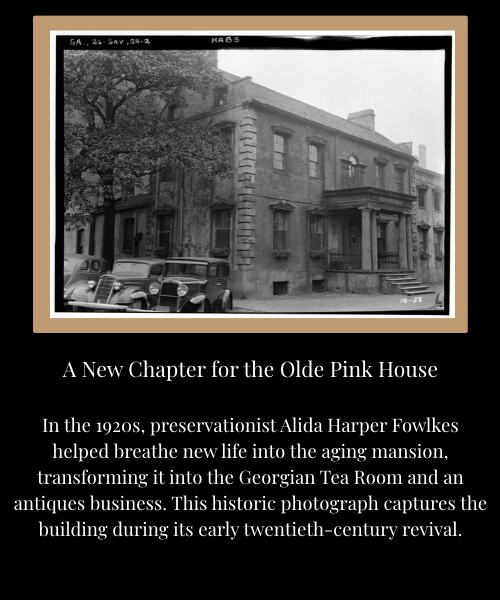
One of those people was Alida Harper Fowlkes.
An antiques enthusiast and preservationist, Fowlkes recognized the value of Savannah's historic architecture at a time when many older buildings were struggling to find a place in the modern city.
In 1929, she helped give the former Habersham mansion a new purpose.
The building became home to the Georgian Tea Room and an antiques business.
Now, I rather like this chapter of the story.
After decades of banking, offices, and assorted commercial enterprises, the old mansion was once again welcoming visitors for something considerably more sociable.
Tea, conversation, beautiful furnishings, and an appreciation for the past.
Fowlkes belonged to a generation of preservation-minded Savannahians whose efforts helped establish the idea that the city's historic buildings were worth saving.
And that change in attitude would prove enormously important.
Because the Olde Pink House was hardly the only architectural treasure in need of attention.
Savannah's historic district, so admired by visitors today, did not survive merely because everyone agreed that old buildings were beautiful.
It survived because people fought for them.
A Second Life on Reynolds Square
The twentieth century brought further changes to the old mansion.
By the late 1960s, preservation and restoration efforts were helping prepare the building for another transformation.
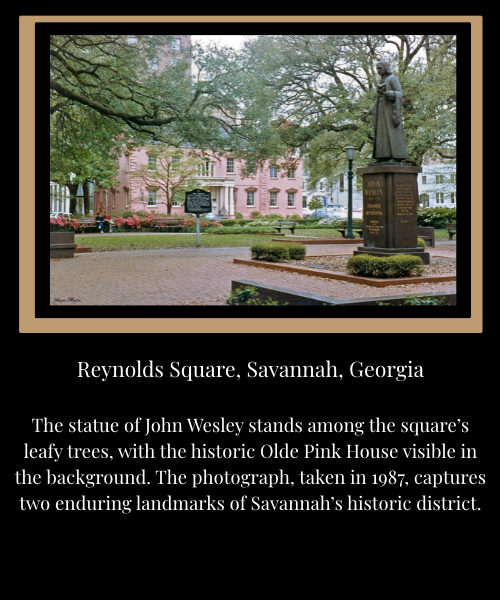
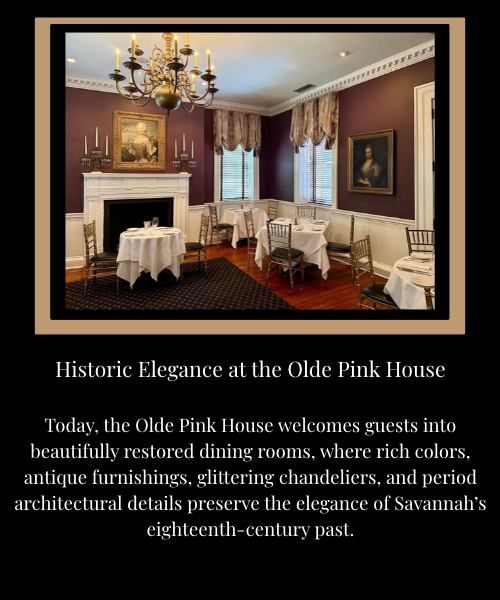
In 1971, the Olde Pink House restaurant opened, returning the grand rooms to a purpose that would have been familiar to their earliest occupants: entertaining guests.
Only now, instead of private invitations and formal gatherings, visitors could come to enjoy a meal surrounded by Savannah history.
The former basement kitchens became part of Planters Tavern, where the old fireplaces and brickwork provide an atmosphere that no modern decorator could convincingly manufacture.
Upstairs, the elegant rooms once again filled with conversation.
And the building's distinctive pink exterior, once regarded as an unfortunate consequence of the underlying brick and stucco, had become its most recognizable feature.
Even the story of that color has inspired disagreement.
One popular explanation holds that the red brick beneath the pale stucco gradually showed through, giving the house its blush-colored appearance. Other architectural accounts suggest the color may have originated in an early tinted finish.
Whatever the explanation, Savannah eventually embraced the pink.
And really, can you imagine the Olde Pink House painted any other color?
The mansion underwent another major restoration after the Balish family acquired it in 1992, continuing the work of preserving the historic building while accommodating its life as a restaurant.
Today, it stands as one of the city's best-known landmarks.
Not simply because it is old, or beautiful, or painted an unusually charming shade of pink.
But because it survived.
The Stories That Remain
Think about everything this remarkable building has witnessed.
The aftermath of the American Revolution. The rise of Savannah's commercial fortunes. The Civil War and Union occupation. Economic uncertainty, changing ownership, architectural decline, and the gradual awakening of a city determined to preserve its past.
Generations have passed through its doors, each leaving some small impression upon the place.
Some arrived to conduct business.
Others came to preserve a piece of history.
And today, thousands come simply to enjoy a memorable evening in one of Savannah's loveliest settings.
But of course, this is Savannah.
And in Savannah, a building with more than two centuries of history rarely escapes without acquiring a few stories that cannot be found in the official records.
Next Sunday: We conclude our visit to the Olde Pink House with its most enduring legends, including the gentleman who supposedly never left, the mysterious sounds heard within its walls, and a cold, rainy Valentine's Day when this beautiful old mansion inspired a mystery of my own.
Savannah Secrets | The Olde Pink House
A Four-Part Historical Series
Part 1: A Savannah Family Divided by Revolution
Part 2: A Mansion, a Mystery, and a Matter of Money
Part 3: From Bank Vaults to Ballroom Fires
Part 4: Ghost Stories and Savannah Legends